
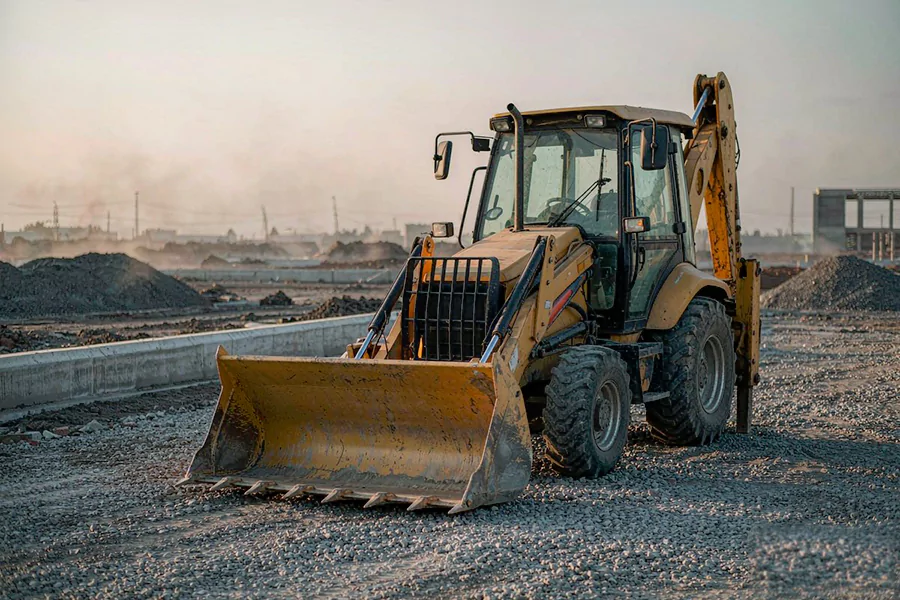
Two machines in one, one engine, one operator. That’s why the 3CX sells, and it’s also why the parts list runs so long.
Engine, hydraulics, shuttle and axles, pins and bushes, then all the cab gear nobody thinks about until a work light dies at nine at night.
Buying for stock or quoting a repair on JCB 3CX replacement parts, memorising numbers only gets you so far. Knowing which groups actually move, and what details you need before you ask anyone for a price, counts for more. Vague enquiries get vague quotes, and a vague quote usually ends with a part coming back.
Engine and service parts
Nothing leaves the shelf faster than a filter. Oil and fuel elements, air filters, the safety element behind them, belts, hoses, coolant-side parts, gaskets, seals. That’s the weekly trade, and most JCB 3CX engine parts enquiries never get past this group.
Rebuild parts are a different animal. A spun bearing or a dropped valve takes the machine off the job for weeks, and the list grows with every strip-down.
Here’s where people get caught. There’s more than one engine family in these machines. Perkins 4.236 and 1004-series on older builds, JCB’s own Dieselmax 444 later on. The bonnet badge won’t tell you which, and the year on its own is no help either. Find the engine plate. It’ll be under grease, and a photo of it saves about three emails.
Hydraulic parts
Count the functions: loader lift and crowd, boom, dipper, bucket, extradig if it’s there, stabilisers, steering. All of it oil under pressure, all shift long.
JCB 3CX hydraulic parts move at two speeds. Filters and hoses pay the bills. Cylinders, pumps and valves are where a wrong order stings, because you’ve spent real money and the machine’s still sat in the yard.
Slow down on cylinder work. A weeping rod gets blamed on the seals every time, and sometimes it is the seals. Run a fingernail down the chrome before you sell the kit. Scoring or an oval bore will chew a new set in a month, and the second strip-down is on you.
Hoses deserve the same suspicion. Same bore, same length, still not the same hose. Pressure rating, end fittings, bend radius, whether the run clears the loader arm at full lift. None of that shows up on a tape measure.
Same goes for pumps. A machine that won’t lift to full height gets blamed on the pump far more often than the pump deserves. Tee a gauge into the circuit before you quote. Relief valve, tired cylinder seals, a hose collapsing inside: all cheaper than a pump, and from the operator’s seat they all feel identical.
Transmission, axle and drivetrain parts
Synchro shuttle on most of them, powershift running through a torque converter on later builds. That one difference decides half of what fits before you get anywhere near individual gears.
Treat symptoms as a starting point rather than a diagnosis. A shuttle that slams into forward, a box whining in one ratio only, a machine creeping in neutral. Three faults, three different parts. A fair share of JCB 3CX transmission parts get ordered on a guess, and guesses turn into comebacks.
Read the plate on the axle itself. Not the year of the machine, not the spec of the last 3CX you worked on. These units get repaired and swapped around, and a fifteen-year-old machine is rarely factory-standard by now.
Pins, bushes and digging wear parts
Pivot slop is how a 3CX shows its hours.
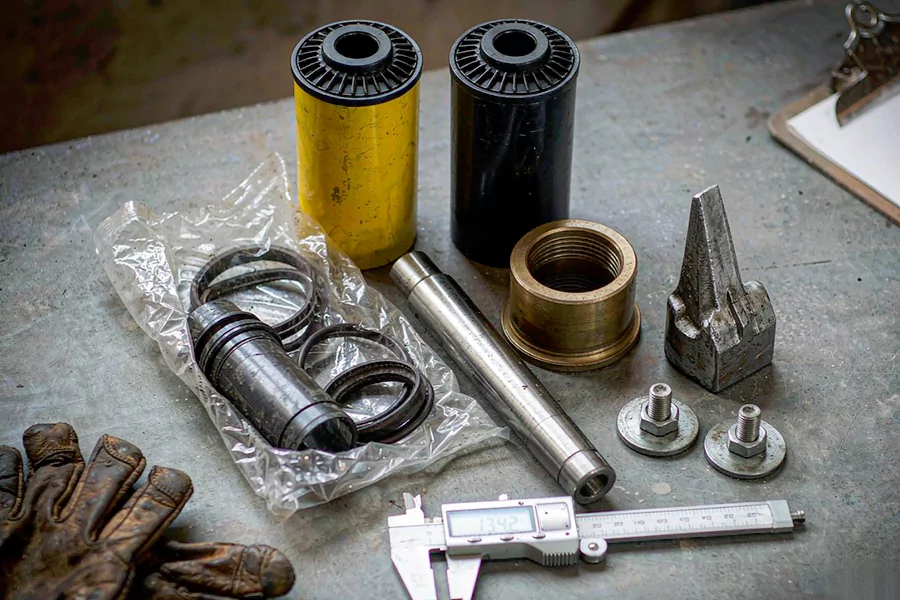
Loader and backhoe live on shock loading and grit, so pins, bushes, joints and anything that touches the ground take the worst of it. Once a pivot goes loose, the pin and the bush have gone together. Pressing a new pin into a worn bush feels like a fix and behaves like a loan. The knock is back before the season’s out. Bosses go oval as well, and dipper or bucket bosses usually want welding and line boring rather than another box of parts.
JCB 3CX wear parts are the volume business. Teeth, adapters, edges. Blunt ones cost fuel, slow the cycle, and push the load into the bucket shell, which is expensive next to the tooth that was supposed to protect it.
Good stock lines for a distributor. Measure before you commit, though. Two tooth patterns can look identical on a screen and be nothing alike in the hand.
Electrical, cab and body parts
None of it is hard to supply. All of it goes wrong at the order stage.
Lamps, work lights, beacons, batteries, mirrors, wipers, glass, fenders, panels, switches, mounting hardware. Simple parts with simple failures and an alarming talent for arriving wrong. Voltage, connector design, left or right hand mounting, cab spec.
Glass and panels are easier to quote from a photo of the mountings than from a number. For electrical bits, part number plus serial usually closes it out in one email.
Getting the identification right
A number only helps when it belongs to the machine in front of you.
Serial first. Model, serial, build year. These were built long enough that specs moved mid-life, and the serial is the only anchor that doesn’t drift.
Catalogue by serial range, not by model name. An exploded diagram pulled from the wrong range looks every bit as convincing as the right one. That’s the trap.
Then put what you have against what you’re offered, and ask about supersessions. Replaced numbers are normal. An unexplained different number isn’t, and it’s the cheapest question you’ll ask all week.
Photos help more than people expect, so get a tape in frame or lay a rule across the bore. Sort the commercial side out early too: availability, minimum order, packing, lead time, freight terms. A keen unit price is worth nothing if the box lands after the machine’s been towed in.
Unglamorous, all of it. On a multi-line international order it’s the difference between a clean shipment and a credit note.
Sourcing JCB 3CX parts for trade
Unit price is the easiest thing to compare and tells you the least. Availability, whether anyone answers a technical question the same day, whether they can tell you what a part actually fits. That’s what the money is really for.
Build the stock list from the fast movers. Filters, pins, teeth, seal kits. Add the slow lines when demand proves itself instead of filling a warehouse with assemblies nobody asks for.
BAIQUAN supplies construction machinery parts to trade buyers through bq-parts.com, which is where the JCB backhoe loader parts enquiries land. Part numbers, machine details, photos, quantities. What comes back is a quote you can check line by line.
Before you order
Wrong orders rarely start with a wrong number. They start with a detail nobody confirmed.
An engine family. An axle. A quantity.
Nail the machine identity, the assembly and the quantity, and the rest of it tends to look after itself.